

Sivasagar, nestled in the lush landscapes of Assam, is a historical town once the capital of the powerful Ahom Dynasty. Known for its stunning palaces, ancient temples, and remarkable monuments, Sivasagar offers a fascinating glimpse into Assam's royal past. Previously called Rangpur, the town was the seat of Ahom power for nearly 600 years, with influences evident in its architecture and traditions. This guide outlines the key attractions, the best time to visit, how to reach Sivasagar, and why Unimoni Travel is the perfect partner for your journey.

Accredited by the International Air Transport Association (IATA) and recognized by the Ministry of Tourism (MOT), India.

Our 300+ branches ensures that we are always within your reach, providing personalized services no matter where you are.

Get the most competitive rates for domestic and international flights and comprehensive travel insurance to secure your journey.

Enjoy peace of mind with our round-the-clock support for passport assistance, VISA & document attestation.
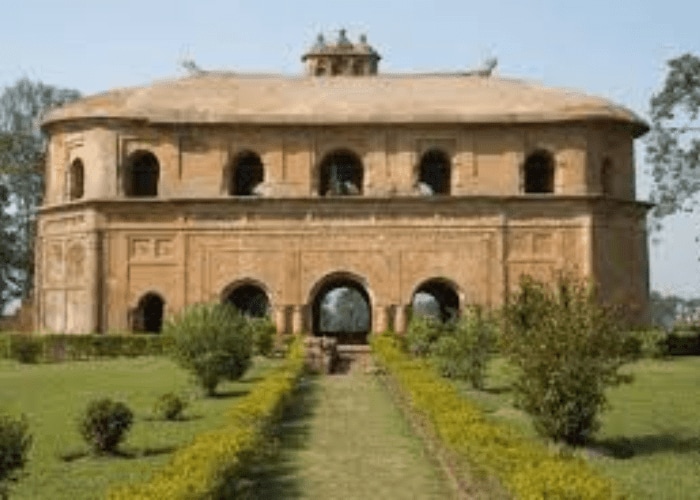
One of the most iconic structures in Sivasagar is Rang Ghar, an ancient amphitheatre built during the reign of the Ahom king Pramatta Singha. Often referred to as the "Colosseum of the East," Rang Ghar is an extraordinary two-story pavilion showcasing distinct Ahom architectural styles. Its unique roof, shaped like an inverted boat, along with its elegant arches and carvings, reflects the architectural prowess of the Ahoms. Constructed using organic materials such as bricks, fish oil, and rice paste, Rang Ghar was a royal sports pavilion where the Ahom royalty watched various sporting events, including wrestling and buffalo fights.
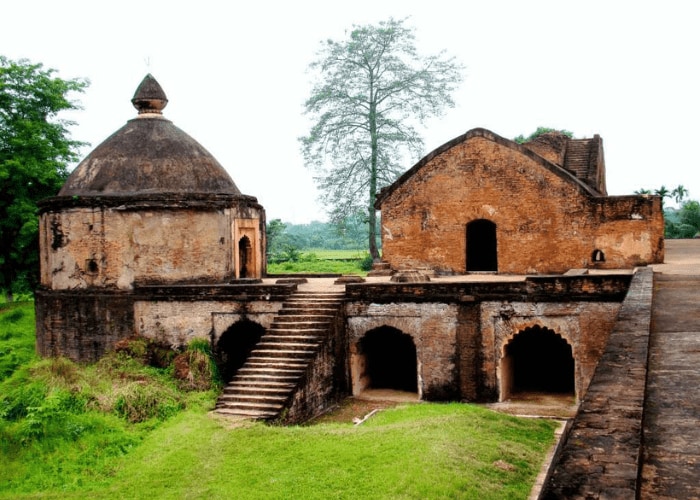
Talatal Ghar, also known as the "underground house," is an impressive palace that once served as a military base and a royal residence. This seven-story structure features three levels underground. King Rudra Singha built it and expanded it with his son Rajeswar Singha. The palace is famous for its complex maze of tunnels and secret passages, utilized to evade enemies and move troops covertly.
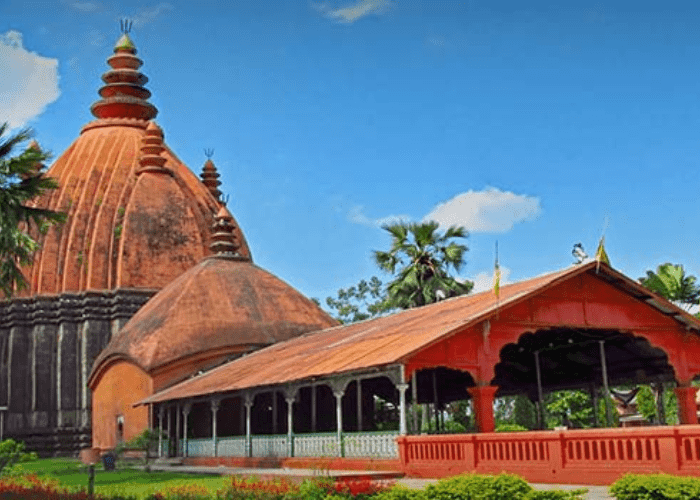
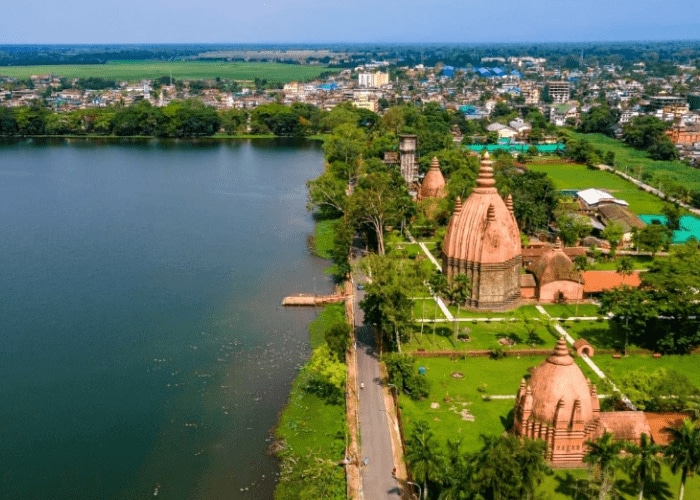
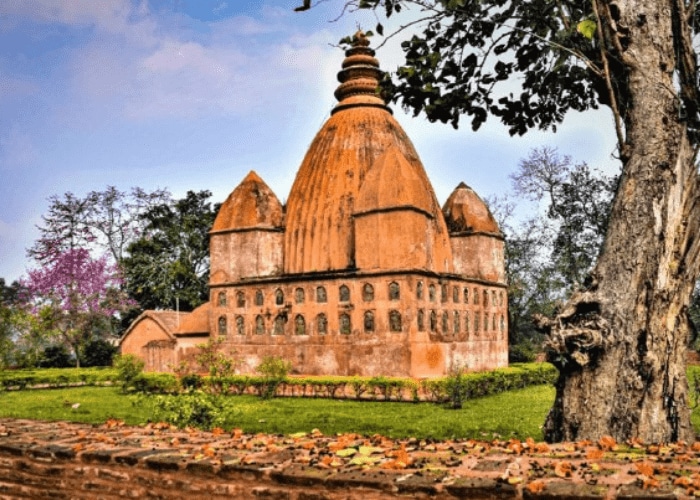
Sivadol, the tallest Shiva temple in India, stands 104 feet high and is part of a trio of temples dedicated to the Hindu deities Shiva, Vishnu, and Durga. Built by Queen Ambika, the wife of King Siba Singha, this temple complex exemplifies the spiritual devotion and architectural grandeur of the Ahom rulers. The temples are situated on the banks of the Sivasagar Tank (also known as Borpukhuri), an artificial lake that contributes to the serene atmosphere of the area. The annual Maha Shivaratri festival attracts thousands of pilgrims and tourists, making Sivadol a vibrant center of spirituality and devotion.
Joysagar Tank is one of the largest lakes in India, created in memory of Queen Joymoti by King Rudra Singha. This expansive 318-acre lake was supposedly constructed in a single day, according to local folklore, and showcases the engineering prowess of the Ahom dynasty. Surrounding the lake is a cluster of temples known as the Joysagar Temples, which includes temples dedicated to Shiva, Vishnu, and Devi, each boasting distinctive Ahom architectural features. The scenic beauty and historical significance of Joysagar make it a popular destination for visitors looking to relax and enjoy the tranquil environment.
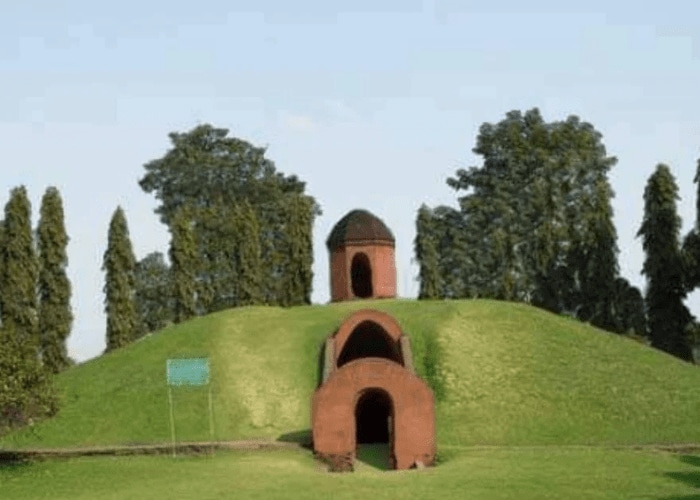
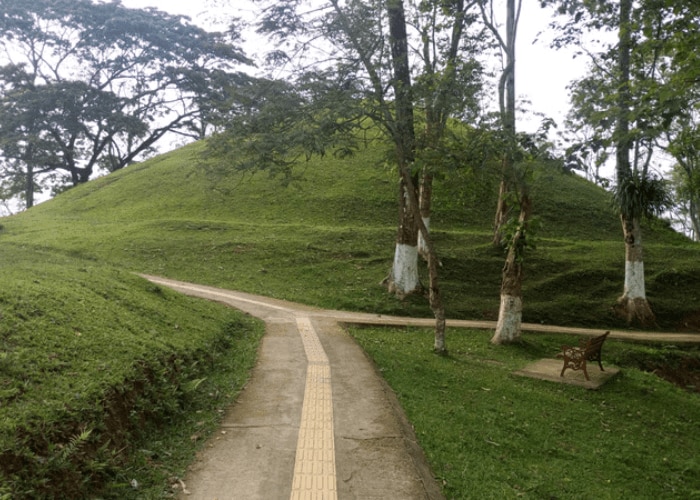
Located approximately 28 km from Sivasagar, Charaideo Maidam is an ancient burial site for Ahom kings and queens. It is often compared to the pyramids of Egypt due to its unique architectural style and cultural significance. The maidams, or burial mounds, are surrounded by small temples, stone carvings, and intricate sculptures that depict Ahom deities and motifs. Charaideo is believed to have been the original capital of the Ahom kingdom and holds immense archaeological and historical value. It offers valuable insights into the burial customs of the Ahom dynasty and their reverence for ancestors.
The ideal time to visit Sivasagar is during the winter months, from November to February. During this period, the weather is cool and pleasant, with daytime temperatures ranging from 10°C to 20°C, making sightseeing and outdoor exploration comfortable. The winter season also coincides with several cultural festivals, including Bihu, Assam's most celebrated festival, showcasing local music, dance, and cuisine. Festivals such as the Raas Mahotsav and the Ali-Ai-Ligang festival offer unique cultural experiences.
The summer months (March to June) in Sivasagar can get quite warm, with temperatures rising above 35°C. While summer isn't the most popular time for travel, it's an excellent option for those who prefer fewer crowds. Monsoon (July to September) brings moderate to heavy rainfall, transforming the landscape into a lush, green paradise. However, heavy rains may occasionally disrupt travel plans.

The nearest airport to Sivasagar is Jorhat Airport, approximately 60 km away. This domestic airport connects Sivasagar to major Indian cities like Kolkata and Guwahati. Lokpriya Gopinath Bordoloi International Airport in Guwahati, around 350 km from Sivasagar, offers better connectivity for international travellers.
Sivasagar Town Railway Station and Simaluguri Junction are the area's primary railway stations. Both stations are well-connected to major cities in Assam and India, including Guwahati, Dibrugarh, and Kolkata. Train journeys are convenient and provide a scenic way to explore Assam's countryside.
Sivasagar is well-connected to other cities in Assam by road, with regular bus services from Guwahati, Jorhat, and Dibrugarh. Travellers can also hire private taxis or self-drive from nearby towns. The road offers picturesque views of Assam's tea gardens, villages, and natural landscapes.

With Unimoni Travel, your trip to Sivasagar becomes a memorable and enriching adventure. With customized services that cater to all your travel needs, from seamless logistics to exclusive deals, Unimoni Travel ensures a journey as fascinating as Sivasagar. So pack your bags, step into the pages of history, and uncover the timeless allure of Assam's royal heritage with Unimoni Travel at your side.